

Freight Market Update: Ocean Schedules, Tariff Actions, CAPE Refunds, PSC Changes and Rail Trends
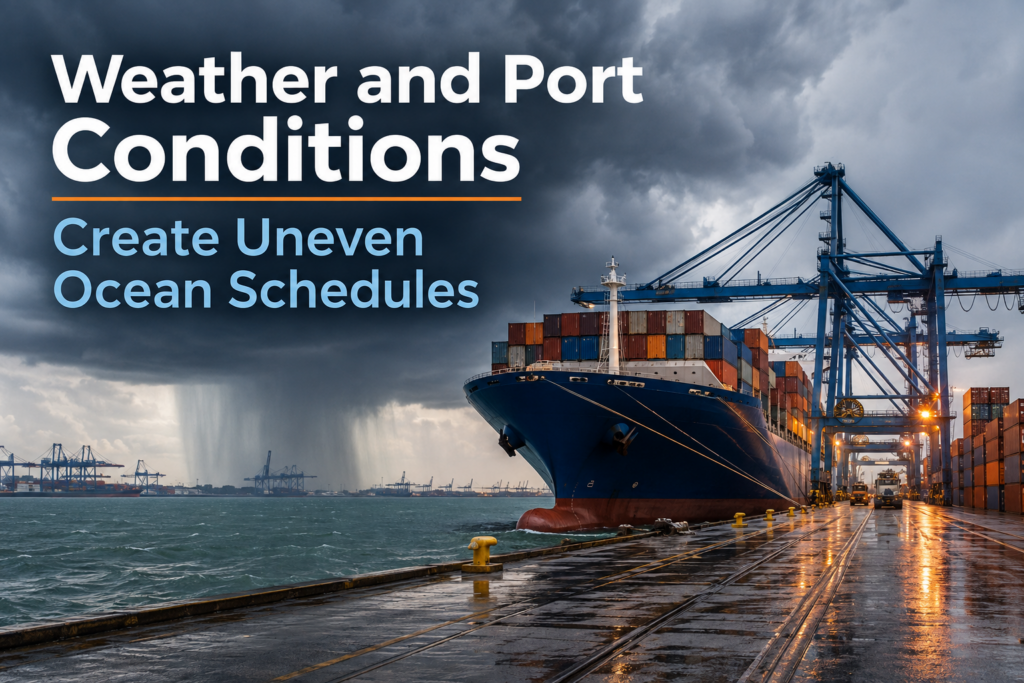
Weather and Port Conditions Create Uneven Ocean Schedules
Ocean schedules have become less predictable over the past two weeks as weather disruptions, port congestion and carrier-specific operating issues affect several international services. Recent typhoon activity in Asia has delayed some vessel departures and contributed to congestion at certain ports. These conditions can cause vessels to arrive outside their original windows, cargo to miss planned connections and containers to be moved to later sailings.
The delays are not limited to one carrier, and conditions can vary significantly by port, service and individual vessel. Based on shipments our team is currently monitoring, some ZIM services have experienced continuing operational delays, while certain COSCO bookings have been moved to later sailings. This does not mean every shipment with these carriers will be affected, but customers should watch booking confirmations and schedule changes closely.
Import activity also remains elevated. U.S. containerized imports in June were 8.2% higher than in June 2025, while the number of containerships heading toward Los Angeles and Long Beach was also running above prior-year levels. Higher cargo volumes do not automatically mean widespread congestion, but they can add pressure when weather delays cause several vessels to arrive close together.
Ocean rates have started to ease on some major routes, including the Far East to the U.S. West Coast, but pricing remains higher than it was a year ago. Lower weekly rates do not necessarily mean that vessel schedules and port operations have returned to normal. Importers should continue booking early, allowing additional transit time and reviewing each shipment individually for revised departures, rollover notices and updated arrival dates.
Current Tariff Actions Require a Layered Review
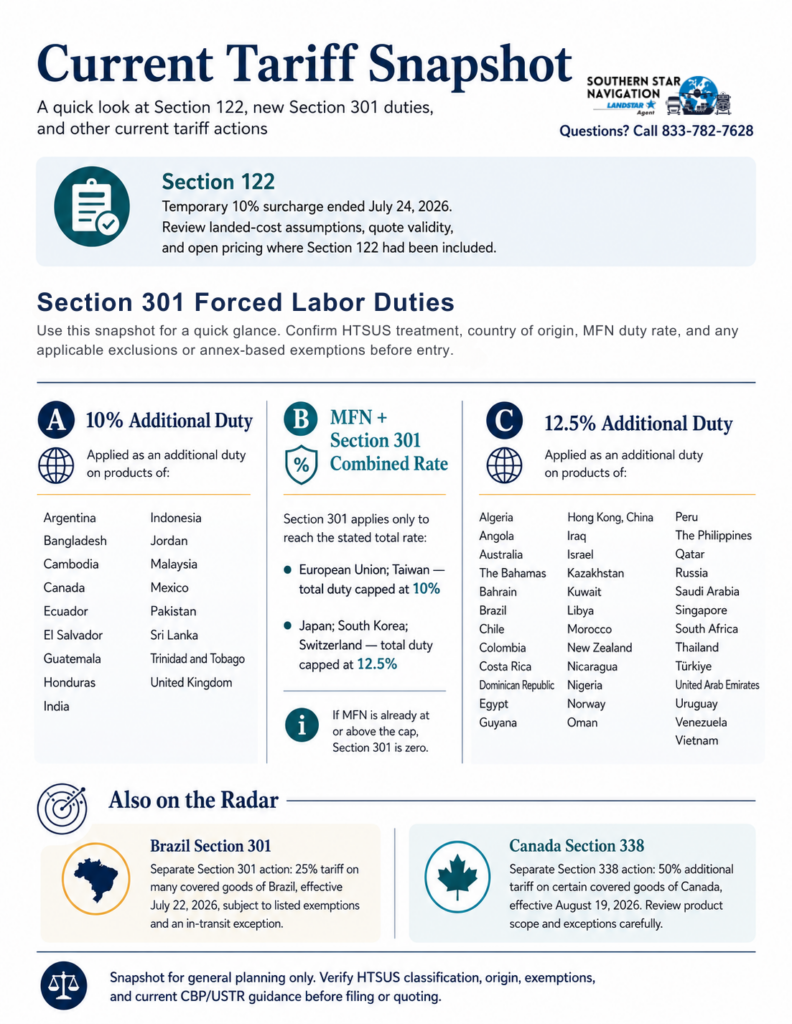
As a continuation of our July 24 customer advisory, we have created two new resources to help importers work through the tariff actions now in effect or approaching implementation. The new Section 301 forced-labor duties took effect July 24 for covered goods from 60 economies, but country of origin is only the beginning of the review. Classification, the applicable Column 1-General duty rate, product exemptions and other trade measures can all affect the final treatment.
The duty structure is not the same for every covered economy. Products from some countries are generally subject to an additional 10% or 12.5% duty, while covered goods from the European Union, Taiwan, Japan, South Korea and Switzerland use a net-of-Column 1-General duty calculation. When the applicable Column 1-General duty rate is already at or above the applicable 10% or 12.5% cap, no additional Section 301 duty is assessed under this action.
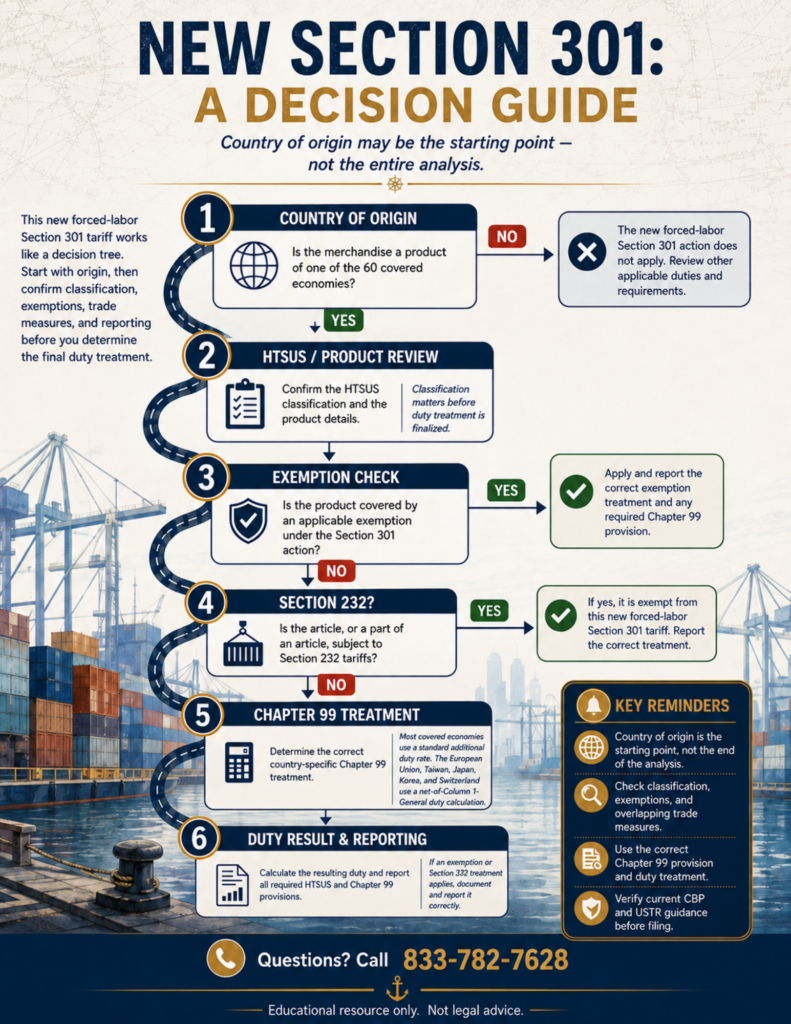
Importers must also determine whether the product qualifies for a general or country-specific exemption. The action excludes certain products and categories, including articles and parts of articles subject to Section 232 tariffs, along with other goods identified in the official exemption provisions. A general product description is not enough to make this determination; the complete HTSUS classification and applicable Chapter 99 requirements must be reviewed.
These new duties are only one part of the current tariff environment. The temporary Section 122 surcharge ended July 24, but importers may still need to review open pricing, landed-cost calculations and entries affected by the timing rules. Separate tariff actions also apply to many covered goods from Brazil, while certain Canadian products are scheduled to become subject to additional Section 338 duties on August 19. These actions have their own product scopes, exemptions and reporting requirements and should not be combined with the new 60-economy Section 301 framework.
To make the information easier to use, our Current Tariff Snapshot provides a quick overview of the major actions importers should have on their radar. Our New Section 301 Decision Guide then walks through the questions that may affect the treatment of an individual product, beginning with country of origin and continuing through classification, exemptions, Section 232 coverage, Chapter 99 treatment and final reporting. The two resources are designed to work together: one provides the broader view, while the other helps organize the product-level review.
Before quoting, filing or finalizing landed costs, importers should confirm the country of origin, complete HTSUS classification, applicable duty formula, available exemptions and any overlapping trade measures. The correct treatment may differ even between products arriving from the same country. Because official requirements and reporting instructions can change, current CBP and USTR guidance should always be reviewed for the specific entry. For assistance with an upcoming shipment, contact Southern Star Navigation at 833-782-7628.
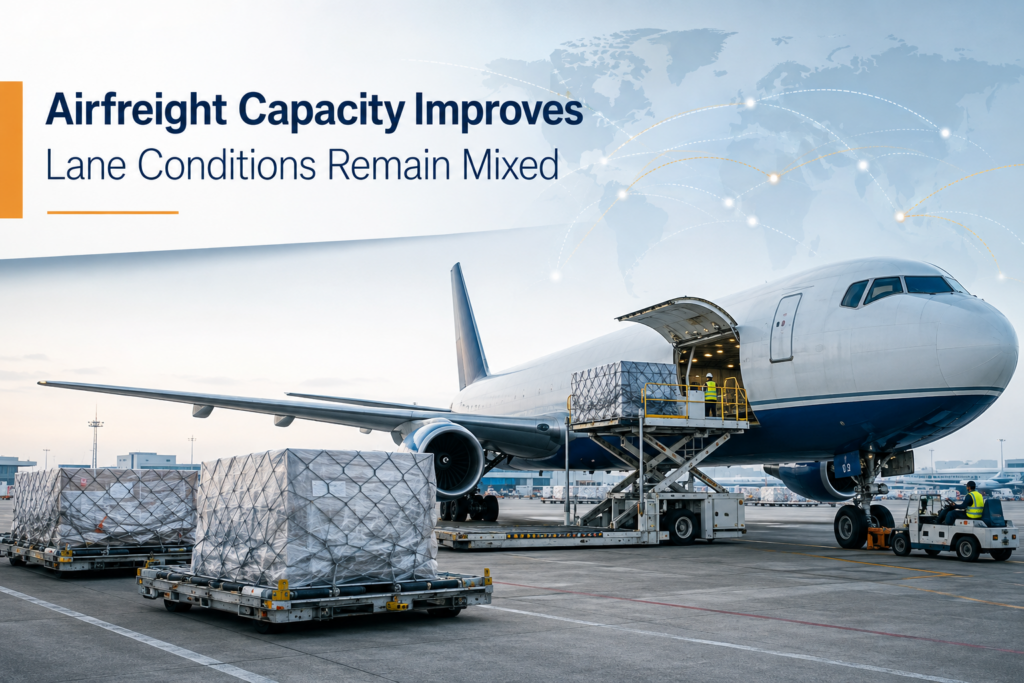
Airfreight Capacity Improves, but Lane Conditions Remain Mixed
Airfreight conditions remain uneven across the major international trade lanes, with pricing and capacity continuing to vary by direction. China-to-U.S. rates were essentially flat during the week ending July 26, but they remained 16% higher than the same time last year. Worldwide capacity increased slightly, supported by a 4% increase from Asia-Pacific origins. Capacity connected to and from Middle East and South Asia origins remained below earlier levels, which may continue to affect certain routings and transit options.
For shippers, the market is offering more choices in some areas, but conditions are not improving evenly across every lane. U.S.-to-China rates increased during the week, while several Europe- and Asia-related routes moved lower, showing how quickly the market can shift by direction. Time-sensitive cargo should be reviewed by airport, routing, carrier and connection point rather than relying on one broad airfreight trend. Comparing total transit time and available capacity can help identify the most dependable option, even when it is not the lowest-priced route.
CBP Reports Progress on IEEPA Tariff Refunds Through CAPE
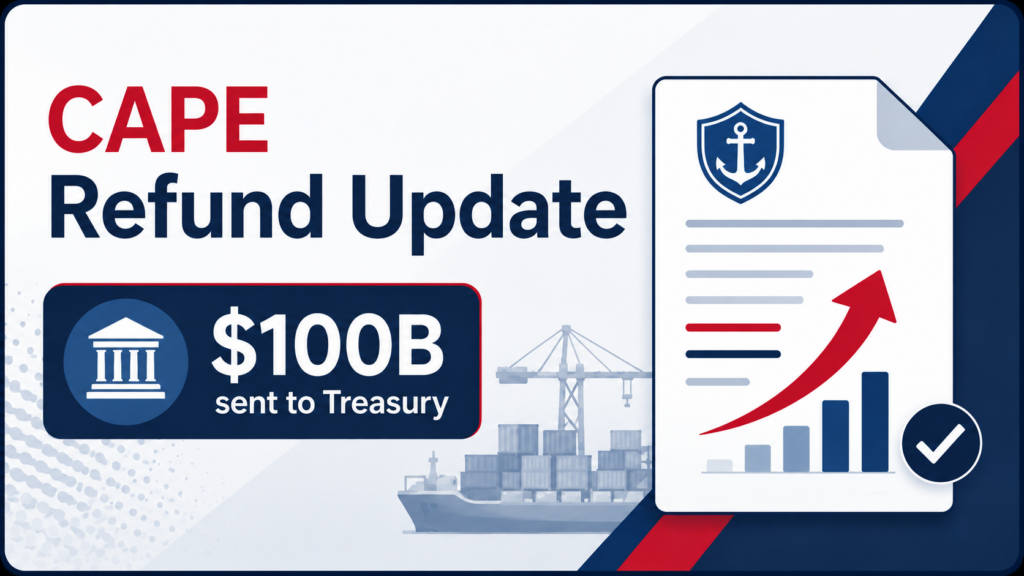
U.S. Customs and Border Protection recently provided the Court of International Trade with an updated look at the IEEPA tariff refund process through CAPE. As of July 31, CBP had received 252,496 CAPE declarations, with 178,213 passing the initial file validations. Those accepted declarations covered 25.1 million entries, and 17.69 million of those entries had already been liquidated or reliquidated without IEEPA duties. CBP also reported that approximately $100 billion in duties and interest had been completed, certified, and sent to the U.S. Treasury for disbursement.
The update also highlights the importance of accurate filing information. Common reasons CAPE declarations failed validation included importer-of-record or filer mismatches, incorrect or nonexistent entry numbers, and CSV files that did not match the ACE template. CBP also reported that 19,726 refunds totaling approximately $1.6 billion had not yet been transmitted to Treasury because ACH information was missing. Importers and brokers should continue reviewing CAPE submissions carefully and confirm that entry, filer, file-format, and payment information is complete and accurate. Read CBP’s full August 4 declaration and CAPE status update here.
CBP Changes Payment and Filing Rules for Post-Summary Corrections
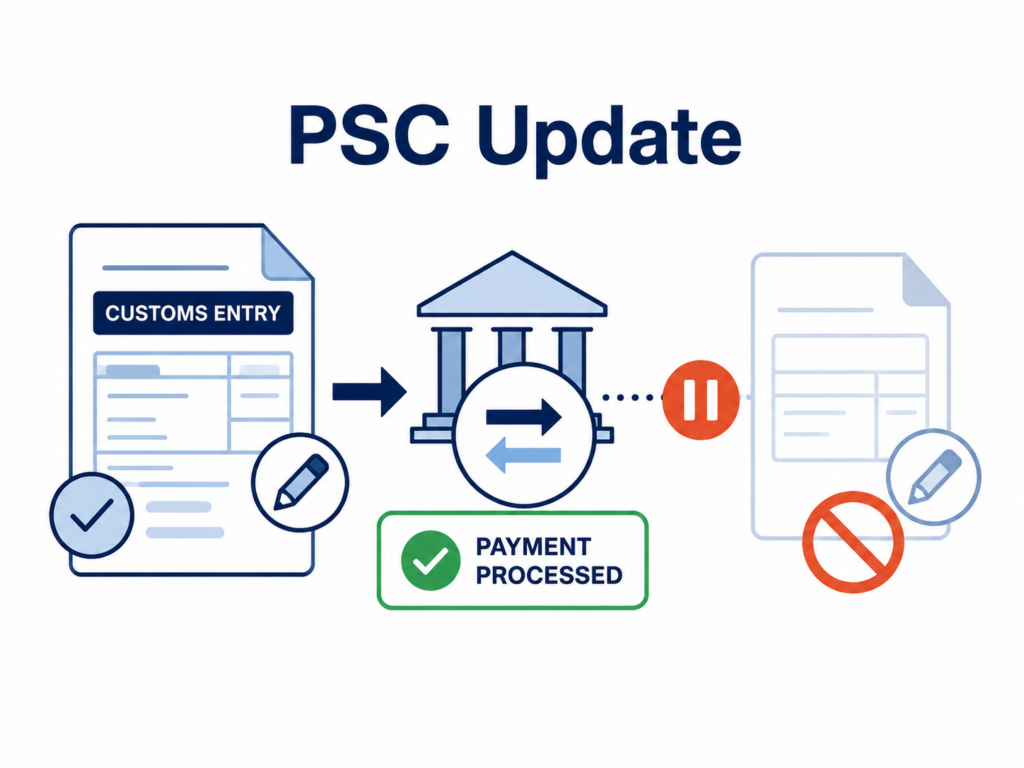
Effective August 5, U.S. Customs and Border Protection changed several requirements for filing and paying increases resulting from Post-Summary Corrections. Any additional duties, taxes, or fees must now be paid electronically through ACH Debit or ACH Credit. Checks and cash are no longer accepted. For increases other than AD/CVD, importers may pay the full amount before liquidation or wait for CBP to issue a bill at liquidation if no additional PSC needs to be filed. However, CBP will not allow another PSC to be filed on the same entry until the increase from the previous correction has been paid in full and processed. Partial payments will not satisfy this requirement.
The changes also require additional antidumping and countervailing duties resulting from a PSC to be paid through ACH within three business days. Interest cannot be paid in advance and will instead be billed, when applicable, after liquidation. CBP also formally expanded the filing timeframe for certain entries whose liquidation remains suspended beyond the normal 300-day PSC window, including entries involving AD/CVD, EAPA proceedings, or court injunctions. Importers that regularly make corrections should confirm that their ACH enrollment and internal payment-tracking procedures are ready so a pending payment does not delay a later correction. Read CBP CSMS #69428352
Truckload Rates Ease After Recent Strength
Truckload spot rates moved lower during the week ending July 26 across all three major equipment types. Dry van rates excluding fuel declined 3.6%, refrigerated rates fell 2.7% and flatbed rates dropped 4.3%. Dry van tendered freight volume also decreased, while tender rejection rates softened. Together, these changes point to less short-term pressure in the broader spot market after stronger conditions earlier in the year. Despite the weekly pullback, dry van spot rates remained well above the same period last year.
The dry van load-to-truck ratio fell 7% as available load postings declined and truck postings increased slightly. This may make capacity easier to secure in some markets, but the improvement will not be felt evenly across every region or type of shipment. Port drayage, refrigerated cargo, oversized freight and appointment-based deliveries can still tighten quickly when delayed vessels arrive close together. Importers should continue planning inland transportation early and provide accurate cargo availability dates so trucks are not scheduled before containers are ready.
Rail Volumes Rise, but Service Varies by Network
Rail volume increased across most major North American Class I networks in the report’s latest quarter-to-date comparison. Quarter-to-date volume was up 10.3% at CSX, 7.5% at Norfolk Southern, 6.3% at BNSF, 6.2% at Union Pacific and 4.3% at CPKC. Canadian National was the exception, with volume down 2.8%. The growth shows that most major rail networks are handling more freight, although results and service conditions vary by carrier and corridor.
Service conditions remain mixed and can look very different from one terminal or corridor to another. Union Pacific’s system dwell improved to 19.8 hours from 21.1 hours a year earlier, while Chicago and Roseville were also showing improvement. CPKC reported a 9.1-hour system dwell average, but dwell was notably higher at certain Mexico locations, including Sanchez and Monterrey. Importers should continue reviewing the actual railroad, terminal and border crossing tied to each shipment instead of relying only on overall network averages.