
DDP Visibility Matters: Why Rising CBP Form 29 Activity Should Get Importers’ Attention
To Our Valued Partners,
We wanted to share a timely customs update that may be helpful as you review upcoming imports, especially shipments moving under DDP terms.
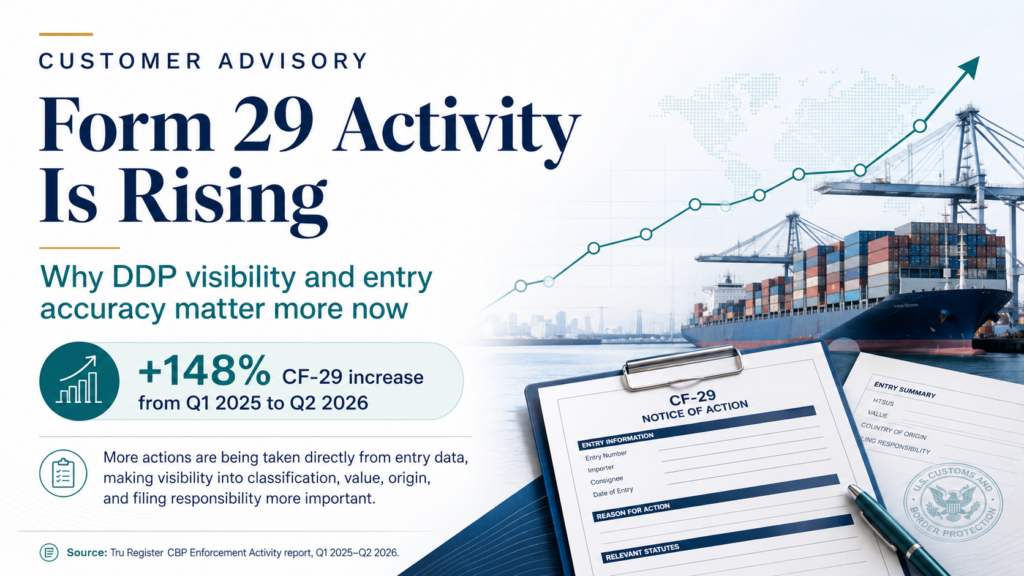
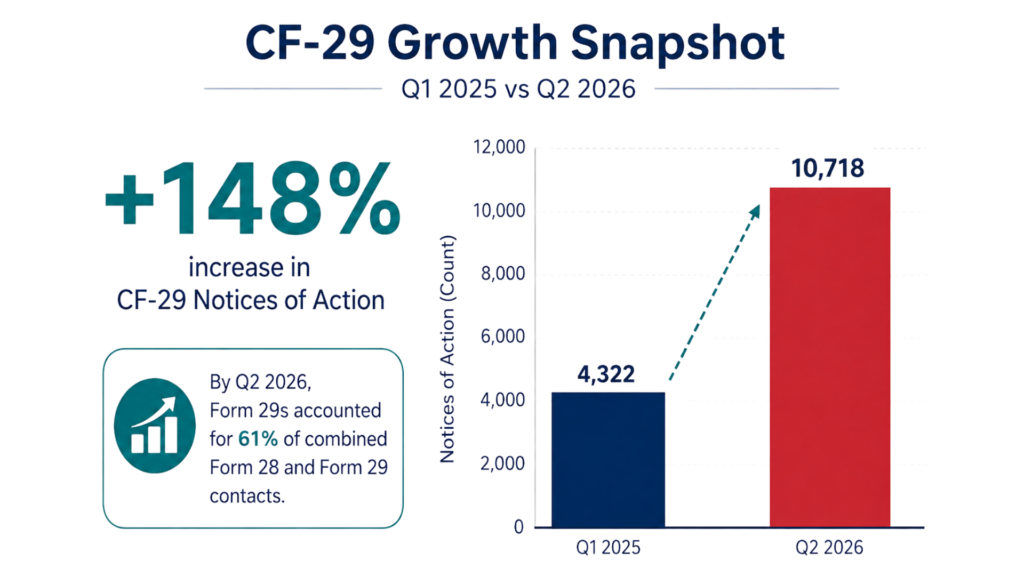
New enforcement data from the Tru CBP Enforcement Activity report shows a clear shift in CBP activity. CBP Form 29 Notices of Action increased 148% from Q1 2025 to Q2 2026, rising from 4,322 to 10,718.
A Form 28 is generally a Request for Information. A Form 29 is a Notice of Action, which may involve a proposed or already-taken change related to classification, value, duty rate, or country of origin.
In simple terms, CBP appears to be moving more often from asking questions to taking action based on the entry data already filed.
This does not mean every shipment is a problem. It does mean entry accuracy, customs visibility, and access to backup records are becoming even more important.
Form 29 Activity Is Rising Sharply
From Q1 2025 to Q2 2026, CBP Form 29 volume increased from 4,322 to 10,718. That is a 148% increase in Notices of Action over the six-quarter period reviewed in the report.
The important part is not only the increase itself. It is what that increase may signal. More customs issues may be identified directly from entry data, including HTS classification, Chapter 99 tariff treatment, country of origin, declared value, and duty calculations.
CBP Is Acting More Often Without First Asking Questions
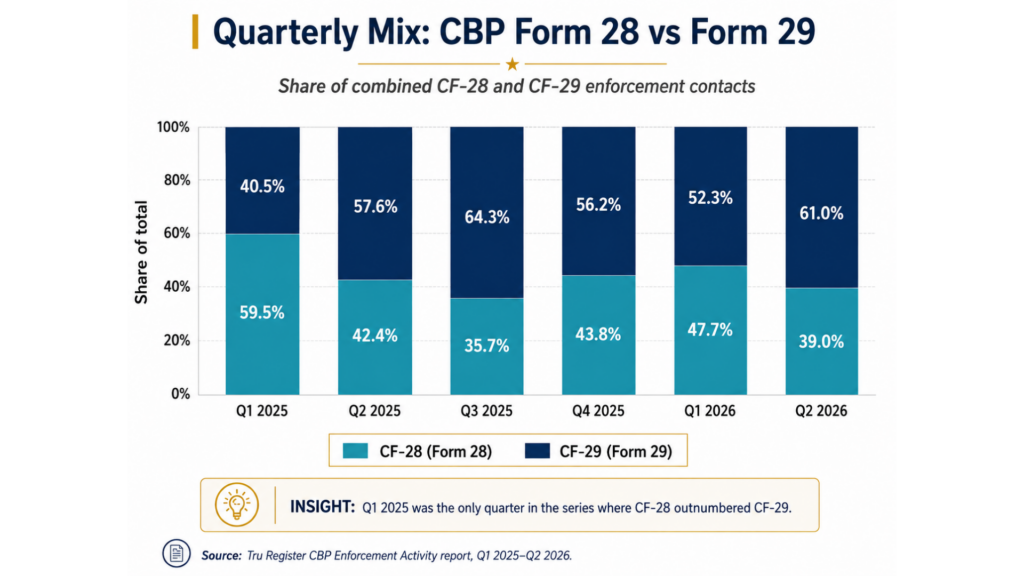
Q1 2025 was the only quarter in the report when Form 28 Requests for Information outnumbered Form 29 Notices of Action. In every quarter after that, Form 29 Notices of Action represented the majority. By Q2 2026, Form 29 Notices accounted for 61% of the combined Form 28 and Form 29 enforcement contacts.
That matters because a Form 28 usually gives the importer an opportunity to provide information before CBP makes a decision. A Form 29 may be a proposed action or an action already taken, which can leave less time to respond or correct the issue.
Quarter-by-Quarter Activity Shows the Trend
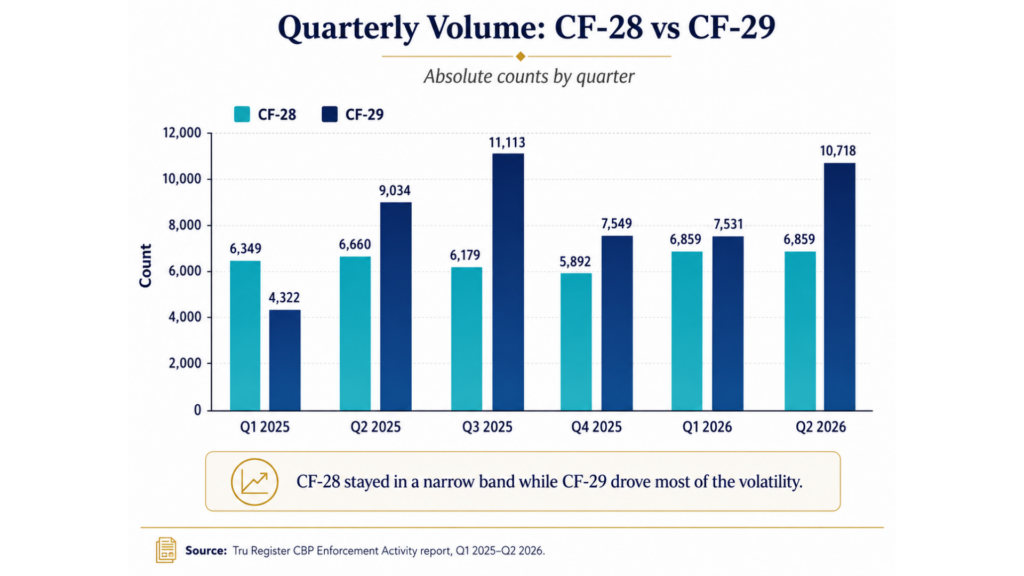
The report shows that CF-28 activity remained within a relatively narrow range, while CF-29 volume changed much more sharply. CF-28 issuances ranged from 5,892 to 6,859 over the six quarters, while CF-29 issuances ranged from 4,322 to a high of 11,113.
The report describes the overall change as mostly a CF-29 story, meaning the growth is coming more from Notices of Action than from Requests for Information.
This is important because many tariff-related issues can be reviewed from the entry data itself. That may include Chapter 99 line coverage, duty calculations, declared origin, and invoice-to-entry value alignment.
Why This Matters for DDP Shipments
DDP can feel simple because delivery and import costs are built into the transaction. However, when the seller or seller-side party controls the import process, the buyer may not always have clear visibility into what was declared at entry.
That can become a problem if CBP later issues a notice or reviews the entry. The buyer may need to know who filed the entry, what HTS classification was used, what country of origin was declared, what value was reported, and who has the supporting documents.
This is especially important in the current tariff environment. The recent forced labor Section 301 action applies to 60 investigated economies, with different treatment depending on the country, MFN duty rate, and listed exemptions.
A Few Things Worth Confirming Before Cargo Moves
Before relying on a seller-controlled import process, it may be worth confirming:
- Who is acting as the Importer of Record
- Who filed the entry
- What HTS classification was used
- What country of origin was declared
- What value was reported at entry
- Whether any Chapter 99 tariff lines apply
- Who has the entry packet and backup documents
- Who is responsible for responding if CBP issues a Form 28 or Form 29
When the Right Partnership Matters
When CBP activity increases and tariff rules become more detailed, having the right logistics partner matters.
Entry visibility, documentation flow, DDP terms, classification, country of origin, and duty treatment are easier to review before cargo moves than after a notice is issued.
Southern Star Navigation can help review upcoming shipments, DDP terms, entry visibility, and documentation flow so there are fewer surprises later.
Please contact our team at 833-782-7628 if you would like to discuss an upcoming shipment or have questions about how this may affect your import process.