

Global Trade and Supply Chain Update June 2026
U.S. Imports Rebound in May as China Volumes Pick Up
After a slower start to the year, U.S. import activity showed signs of renewed strength in May. According to recent transportation market data, containerized imports increased compared to both April and the same month last year. The rebound suggests that many importers continue moving cargo despite ongoing uncertainty surrounding tariffs, trade policy, and global supply chain conditions.
One of the biggest developments was the recovery in import volumes from China. Earlier in the year, imports from China were running below prior year levels, but May saw a significant increase in shipments. As businesses continue evaluating sourcing strategies and inventory needs, many appear to be taking advantage of available capacity and improving transportation conditions.
Ocean freight markets are also showing signs of strengthening. Rates from the Far East to the U.S. West Coast have continued to move higher in recent weeks, reflecting increased demand and stronger booking activity. Forecasts for upcoming weeks indicate that major U.S. ports could experience some of the highest import volumes seen in recent years as summer shipping demand builds.
While challenges remain across global supply chains, the recent increase in imports demonstrates the resilience of international trade. Importers should continue monitoring transportation costs, transit times, and trade developments while maintaining flexibility in their supply chain planning. Companies that stay proactive and communicate closely with Southern Star Navigation will be better positioned to navigate changing market conditions throughout the remainder of 2026.
For importers, the message is clear: cargo is moving, demand remains active, and planning ahead continues to be one of the most effective ways to manage risk and control costs in today’s global market.
Section 122 Tariffs Remain in Effect During Federal Circuit Appeal
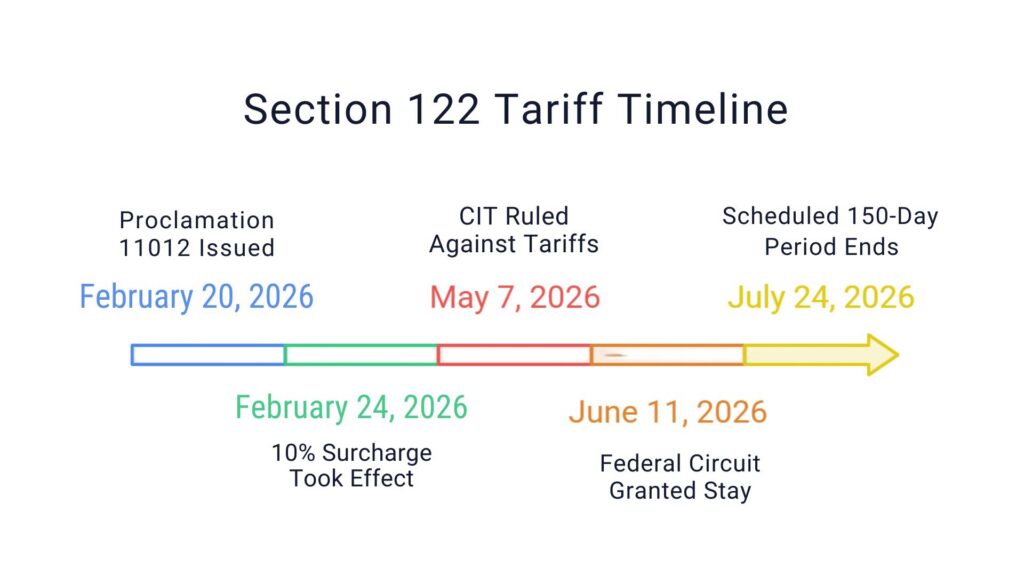
Importers may remember that Section 122 tariffs were introduced earlier this year as a temporary 10% import surcharge. Section 122 of the Trade Act of 1974 allows the President to impose temporary import surcharges of up to 15% for no more than 150 days when fundamental international payments problems require special import measures. Proclamation 11012 was issued on February 20, 2026, and the 10% surcharge took effect on February 24, 2026.
The legal timeline has moved quickly. On May 7, 2026, the U.S. Court of International Trade ruled against the government’s use of Section 122 in this case. However, the ruling was limited in practical effect because the injunction applied only to the specific plaintiff-importers involved, not to all importers across the country. That means most businesses had no immediate relief even before the stay was granted.
On June 11, 2026, the U.S. Court of Appeals for the Federal Circuit granted the government’s request to stay the CIT injunction while the appeal continues. In simple terms, this means the Section 122 tariffs remain in effect for now. The court did not issue a final ruling on whether the tariffs are lawful, but it did find that the government made a sufficient showing that it may succeed on the merits.
For importers, the practical takeaway is straightforward: Section 122 tariffs should still be treated as active and enforceable at this stage. Businesses should continue including the surcharge in landed cost planning, entry review, and tariff exposure discussions unless further court action or government guidance changes the current status.
While the final outcome of the Section 122 appeal is not yet known, the June 11 stay is an important reminder that tariff policy remains active, fast-moving, and important to watch closely. If you have questions about how current tariff developments may affect your import costs, entry planning, or supply chain strategy, contact Southern Star Navigation. We will continue monitoring these updates and helping customers stay informed as the trade environment continues to change.
Read More: Review the full Section 122 tariff update.
IEEPA Refund Update: CAPE Progress Continues
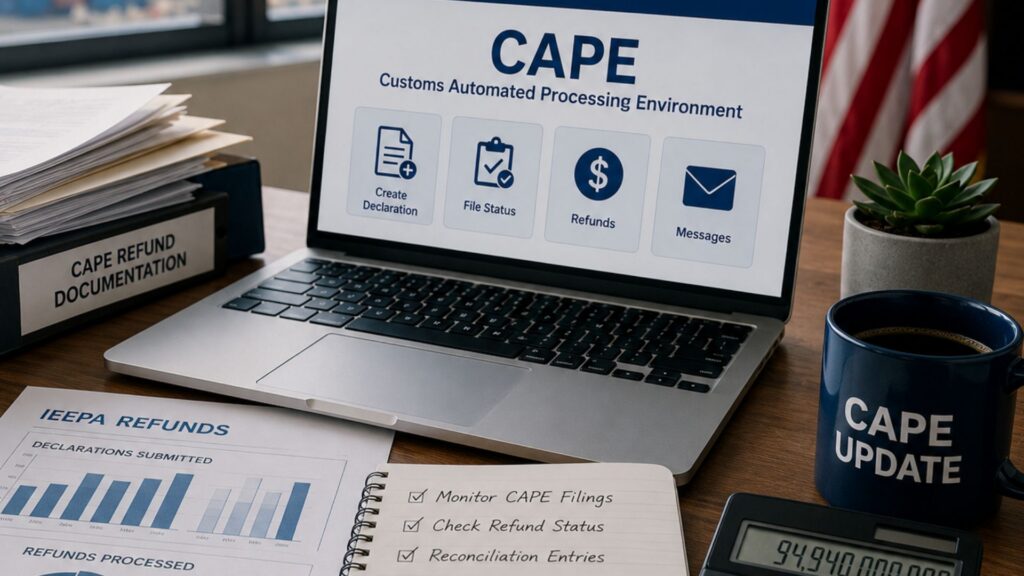
CBP filed a June 10 declaration with the U.S. Court of International Trade providing updated data on IEEPA tariff refunds being processed through CAPE. As of June 5, CBP reported that 181,155 CAPE declarations had been submitted, with 125,576 passing file validations. Those accepted declarations covered approximately 16.74 million entries, and 10.60 million entries had already been liquidated or reliquidated without IEEPA duties. CBP also reported approximately $94.94 billion in potential and certified refunds accepted for CAPE processing, with approximately $23.68 billion, including duties plus interest, completed, certified, and sent to Treasury for disbursement.
The next major CAPE development is expected on June 29, 2026, when CBP anticipates deploying functionality for entries flagged for reconciliation. Final liquidated entries remain more complex because the government has stated that CBP cannot process those refunds without importer-specific court authorization. Importers should continue monitoring CAPE filings, refund status, reconciliation entries, protests, final liquidated entries, and ACH or CBP Form 4811 information to avoid unnecessary payment delays.

Customs Enforcement Is Moving Toward More Accountability
Last week, the White House issued an Executive Order titled Strengthening Customs Enforcement. The order does not change every import requirement overnight, and many items still require DHS and CBP to issue regulations, guidance, policy updates, or complete other implementation steps. However, the message is clear: customs enforcement is moving toward more accountability, stronger documentation expectations, and closer attention to who is responsible during the import process.
For importers, this is a good time to review the basics before cargo moves. Who is acting as Importer of Record? Is the IOR setup clearly documented? Is a foreign IOR or supplier-controlled process being used? Are product descriptions, valuation, origin, classification, and supply chain records complete? At Southern Star Navigation, we help customers bring more structure, visibility, and communication to the international shipping process, including freight planning, customs brokerage coordination, shipment readiness, and communication with overseas parties. We created a Customs Enforcement Overview to highlight key areas importers may want to review as DHS and CBP move forward with implementation. Official Executive Order: Strengthening Customs Enforcement

The Strait of Hormuz Sees Continued Movement Under U.S. Support
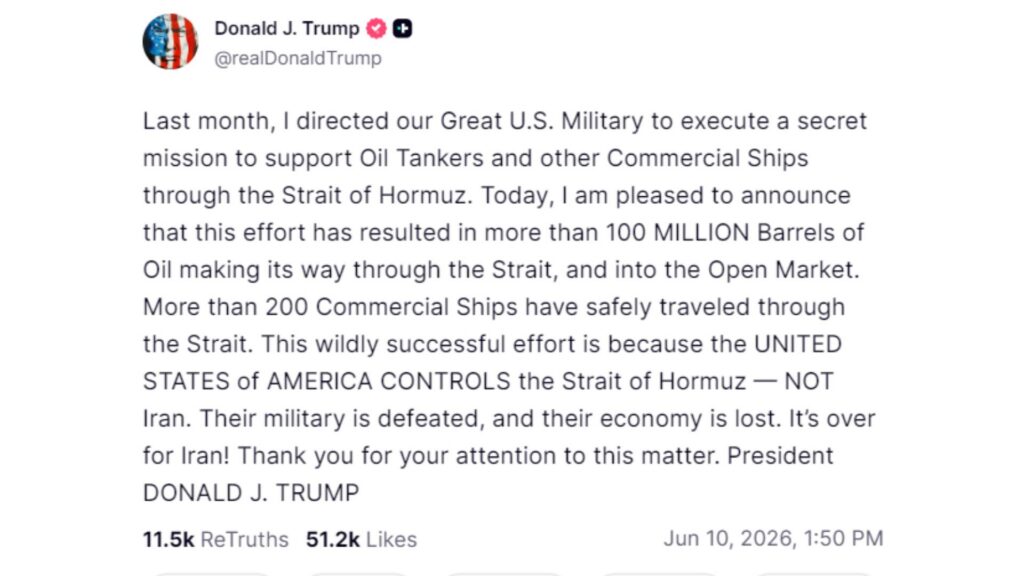
President Trump announced this week that a U.S. effort to support commercial shipping through the Strait of Hormuz has helped move more than 100 million barrels of oil to market and allowed more than 200 commercial vessels to safely transit the waterway. The announcement highlights continued movement through one of the world’s most important energy trade routes, even as carriers and ship operators remain focused on safe and reliable transit planning.
For supply chain leaders, the key takeaway is that cargo movement has not stopped. While the region still requires close monitoring, the reported vessel activity shows that coordinated support and careful planning can help keep critical trade lanes moving. Businesses with freight connected to the Middle East should continue staying informed, reviewing routing options, and working with Southern Star Navigation to plan around changing market conditions.

Truckload Rates Continue Moving Higher
Truckload rates continued to strengthen in May, with dry van, flatbed, and refrigerated spot rates all posting year over year increases. Industry data shows that spot rates are moving closer to contract rates, a sign that freight demand and capacity are becoming more balanced. At the same time, diesel prices remain elevated, adding pressure to transportation costs throughout the supply chain.
For importers, domestic transportation remains a critical link between ports, distribution centers, and final destinations. While ocean and air freight often receive the most attention, inland transportation costs can have a significant impact on overall landed costs. As trucking rates continue to trend higher, businesses may benefit from planning shipments early, maintaining flexibility in routing, and working closely with Southern Star Navigation to secure capacity and manage transportation expenses.

Air Cargo Market Remains Active Despite Global Uncertainty
Air cargo continues to play an important role for shippers managing time-sensitive freight and supply chain disruptions. Recent market data shows rates on major international trade lanes remain elevated compared to last year, reflecting continued demand for reliable and fast transportation options.
Although geopolitical concerns and capacity constraints continue to affect some regions, cargo volumes remain steady across many key markets. Businesses moving high-value products, technology equipment, and urgent inventory continue to rely on airfreight to maintain supply chain continuity. As global trade patterns evolve, air cargo remains a valuable tool for companies looking to balance speed, flexibility, and customer service.