
What CBP’s 2026–2030 Strategy Means for Importers: More Targeting, More Enforcement, More Automation

U.S. Customs and Border Protection’s Office of Field Operations has released its new OFO Strategy 2026–2030, providing a roadmap for how the agency plans to protect lawful trade, travel and agriculture while strengthening national and economic security over the next four years.
For importers, this is not a new tariff announcement or an immediate compliance requirement. Instead, the strategy gives the trade community an important look at where CBP is headed. Throughout the plan, CBP places greater emphasis on intelligence, analytics, automation, enforcement, standardized processes and stronger communication with trade stakeholders.
For companies involved in international trade, understanding that direction is valuable. It gives importers an opportunity to look at their own processes today and make sure their documentation, product information, supplier records and internal procedures can support an increasingly data-driven trade environment.
Economic Security Is a Major Focus
One of CBP’s four strategic goals is Economic Security. Under this goal, the Office of Field Operations plans to modernize processes and tools to keep pace with changes in industry and the economy while supporting secure and compliant trade.
CBP breaks this goal into three main areas: Transform Enforcement and Compliance, Standardize Operations, and Trade and Agriculture.
The overall message is positive for companies that take compliance seriously. CBP wants to strengthen enforcement where problems exist, but it also wants to improve the movement of lawful trade through better processes, technology and stakeholder engagement.
For international importers, this makes preparation and communication increasingly important. Accurate shipment information and well-organized records can help companies respond more efficiently when questions arise.

More Attention to Enforcement and Compliance
CBP states that it plans to strengthen enforcement measures and consequences for violations while also expanding opportunities that support trade compliance.
That does not mean every importer should expect additional inspections or problems. It does mean CBP is continuing to build an environment where accurate information and good compliance practices matter.
Importers should continue paying close attention to the fundamentals, including product classification, country of origin, valuation, tariff applicability and the documentation supporting each transaction.
These responsibilities ultimately belong to the importer, but international shipments involve many different parties. Suppliers, customs brokers, transportation providers and importers all contribute information that may be used throughout the shipment process.
That is one reason strong partnerships matter.
Southern Star Navigation supports global imports and exports through ocean and air freight, customs brokerage and additional transportation solutions. Having experienced partners involved in an international shipment can make communication easier and help ensure everyone is working from consistent shipment information.
CBP Is Paying Close Attention to Transshipment and Duty Evasion
One of the most important sections of the strategy for international importers addresses critical supply chain threats, illicit imports, illegal transshipment and other duty evasion tactics.
This deserves attention because international trade has become increasingly complex. Tariffs, country specific trade measures, antidumping and countervailing duties, Section 301 and Section 232 actions, and other requirements can make the origin and movement of merchandise especially important.
Routing a product through another country does not automatically change its country of origin.
Importers should understand where their merchandise is actually manufactured, what processing takes place in each country, who their suppliers are and whether their documentation supports the information being declared when the goods enter the United States.
This is particularly important when suppliers change factories, production locations or routing.
A freight provider cannot determine an importer’s legal customs obligations, but good communication throughout the international supply chain can help prevent surprises. When routing, supplier information or shipment details change, those changes should be identified and communicated early so the appropriate customs professionals can review them when necessary.

Expect More Data Driven Targeting
CBP’s strategy also places significant emphasis on intelligence and analytics.
The Office of Field Operations plans to improve information gathering and sharing and expand the use of advanced analytical targeting and vetting data to support risk-based decisions.
For importers, this reinforces the importance of consistency.
CBP receives information about international shipments from multiple sources and at different stages of the import process. Commercial invoices, packing lists, entry information, transportation records and other documentation should accurately reflect the underlying transaction.
Product descriptions should make sense. Values should be supported. Supplier and manufacturer information should be accurate. Country of origin information should be consistent with the actual production of the merchandise.
The more effectively CBP can analyze information, the more important it becomes for importers to know what is being submitted on their behalf.
Automation Will Play a Larger Role
Technology is another major part of the OFO Strategy 2026–2030.
CBP plans to increase its use of automation and innovative solutions and create a single source platform that can provide OFO employees with information for real time decision making. The strategy also discusses improving how operational information is managed, visualized and shared.
For the trade community, this is an important development to watch.
Better connected systems can help CBP make decisions faster and identify areas that require additional review. At the same time, modernization may also help CBP streamline legitimate trade and create more efficient processes for compliant businesses.
The takeaway for importers is simple. Good information matters from the beginning of the shipment.
Companies should not wait until CBP asks a question to determine where their records are located or whether the information provided by a supplier is accurate.
CBP Wants More Consistency Across Operations
The strategy also focuses heavily on standardization and integration.
CBP plans to develop more consistent operational standards, improve coordination of policies and create systems that work together more effectively.
For the trade community, greater consistency could be a welcome improvement.
International importers sometimes work with shipments entering through different ports and using different modes of transportation. More standardized processes and better integrated systems may help provide greater consistency in how lawful trade is processed.
CBP also emphasizes communication and stakeholder education throughout the strategy. That is important because trade regulations continue to change quickly, and importers need clear information when policies, enforcement priorities or procedures change.
Southern Star Navigation closely follows developments affecting international transportation and trade so we can keep our partners informed. Sharing important CBP updates, tariff changes and transportation developments is part of helping customers understand what is happening around their supply chains.
What Should Importers Do Now?
There is no new filing requirement created simply because CBP released the OFO Strategy 2026–2030.
Importers do not need to overhaul their operations because of this announcement. Instead, the strategy is a good reminder to review the basics and make sure existing processes are working as they should.
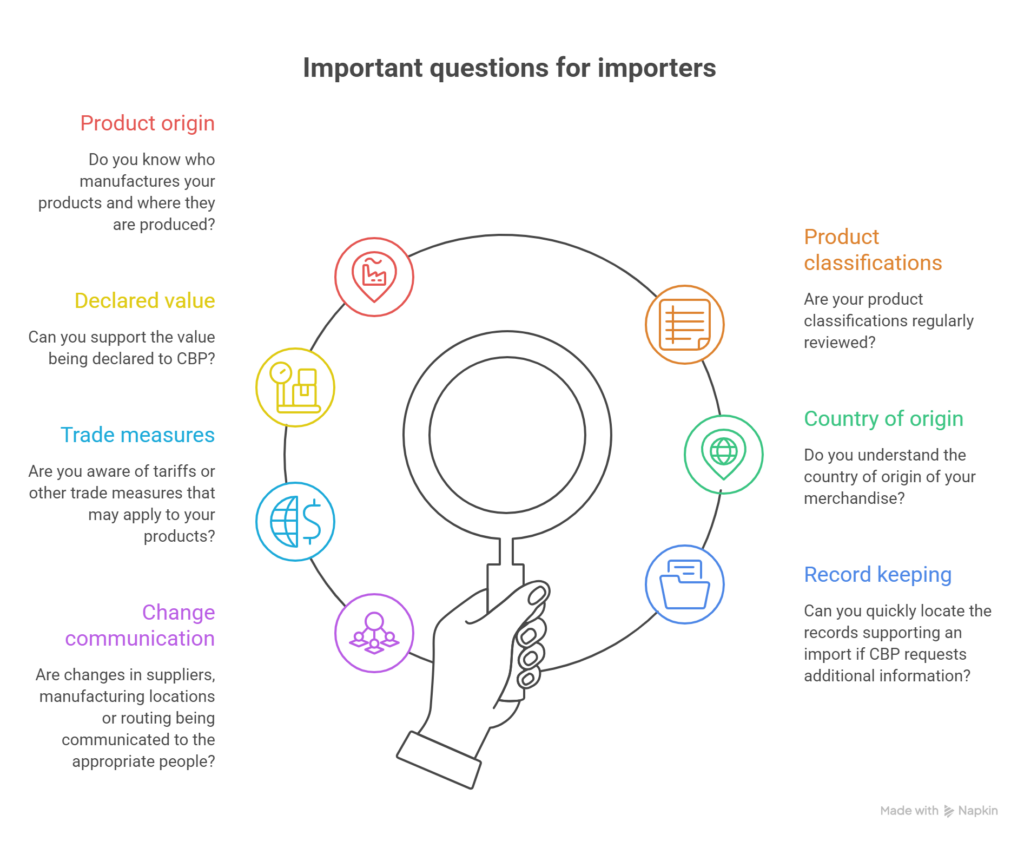
Importers should be able to answer some important questions about their shipments.
Do you know who manufactures your products and where they are produced?
Are your product classifications regularly reviewed?
Can you support the value being declared to CBP?
Do you understand the country of origin of your merchandise?
Are you aware of tariffs or other trade measures that may apply to your products?
Can you quickly locate the records supporting an import if CBP requests additional information?
Are changes in suppliers, manufacturing locations or routing being communicated to the appropriate people?
For companies importing regularly, these should be ongoing business practices rather than something addressed only after a CBP inquiry arrives.
International Transportation and Customs Compliance Are Connected
An international shipment involves much more than moving a container or piece of cargo from one location to another.
Transportation documents, supplier information, routing, cargo descriptions and customs information can all intersect during the import process.
That is why communication between the importer, supplier, customs broker and transportation provider is so valuable.
Southern Star Navigation provides international ocean and air freight services along with customs brokerage and other logistics solutions. This allows us to support customers across multiple parts of their international transportation process while maintaining clear communication as shipments move through the supply chain.
The goal is not to replace an importer’s own compliance responsibilities. It is to create a stronger transportation partnership where information moves with the freight and questions can be addressed as early as possible.
A More Modern Trade Environment Is Ahead
CBP’s 2026–2030 strategy is not only about enforcement.
The agency also wants to streamline lawful trade, modernize technology, improve communication, standardize operations and give its workforce better information and tools.
That balance is important.
CBP processed approximately $3.6 trillion in import cargo shipments during fiscal year 2025, demonstrating just how significant efficient trade processing is to the U.S. economy.
For businesses that import into the United States, CBP’s strategy provides a useful look at the direction of the next several years. Importers should expect more intelligence-driven targeting, greater use of automation, increased attention to transshipment and duty evasion, stronger enforcement where violations occur and continued efforts to improve the processing of lawful trade.
Importers that understand their supply chains, maintain accurate records and communicate closely with their international partners will be in a better position to adapt as these initiatives develop.
At Southern Star Navigation, our focus is helping businesses move international freight with dependable transportation, clear communication and ongoing support. As CBP continues modernizing the trade environment, a knowledgeable and connected logistics partnership can help importers stay informed, prepared and ready for what comes next.