

Panama Canal Changes, CBP Updates, Drawback, De Minimis and Freight Market Planning
Panama Canal Changes Bring Added Planning Considerations
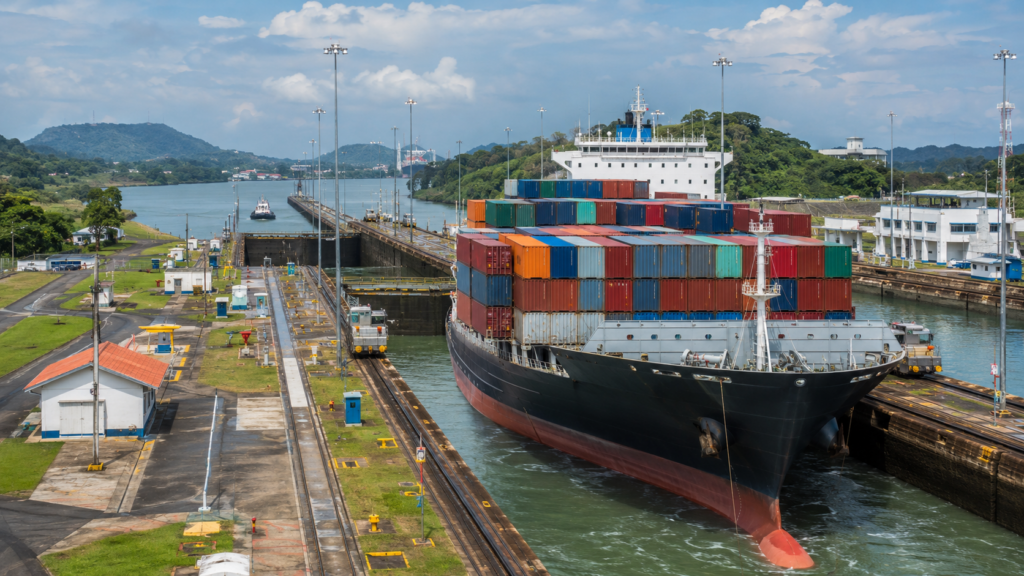
Panama Canal conditions are becoming an important planning item for importers moving cargo from Asia to the U.S. East Coast and Gulf Coast. Beginning September 3, the Canal will adjust daily transit availability to 9 Neopanamax slots and 25 Panamax slots, with Panamax slots scheduled to drop further to 23 daily slots on September 15. The Canal has also noted that vessels arriving without a secured reservation may face longer waiting times. For importers, this means booking status, routing, and arrival timing should be reviewed closely before cargo moves.
Draft limits are also part of the current picture. The Panama Canal Authority postponed the 48-foot draft limit to September 2, 2026, and the 47.5-foot draft limit to October 1, 2026. Draft restrictions matter because they can affect how much cargo a vessel can safely carry through the Canal. Even when a sailing remains scheduled, vessel capacity, routing decisions, and equipment planning may still be affected.
Carrier surcharges are another item to watch. MSC has announced updated Panama Canal Surcharge amounts for Asia to U.S. East Coast and Gulf Coast cargo, effective September 12, at $149 per 20-foot container, $297 per 40-foot container, and $376 per 45-foot container. CMA CGM has also listed a Panama Canal Adjustment Factor of $500 per TEU, effective September 10, for Asia cargo moving via the Panama Canal to the U.S. East Coast and Gulf Coast. These charges can vary by carrier, lane, equipment size, and effective date, so the full all-in cost should be reviewed before quoting or booking.
The practical takeaway is to plan early and check the details. East Coast and Gulf Coast routings may still be the right option for many shipments, but importers should confirm the vessel routing, carrier surcharge, reservation status, transit time, and inland delivery plan. Southern Star Navigation will continue monitoring Panama Canal updates and carrier advisories. If you have an upcoming shipment moving through the Canal or are comparing routing options, our team is here to help review the details before cargo moves.
CBP Adds New Focus on Importer Identity Accuracy
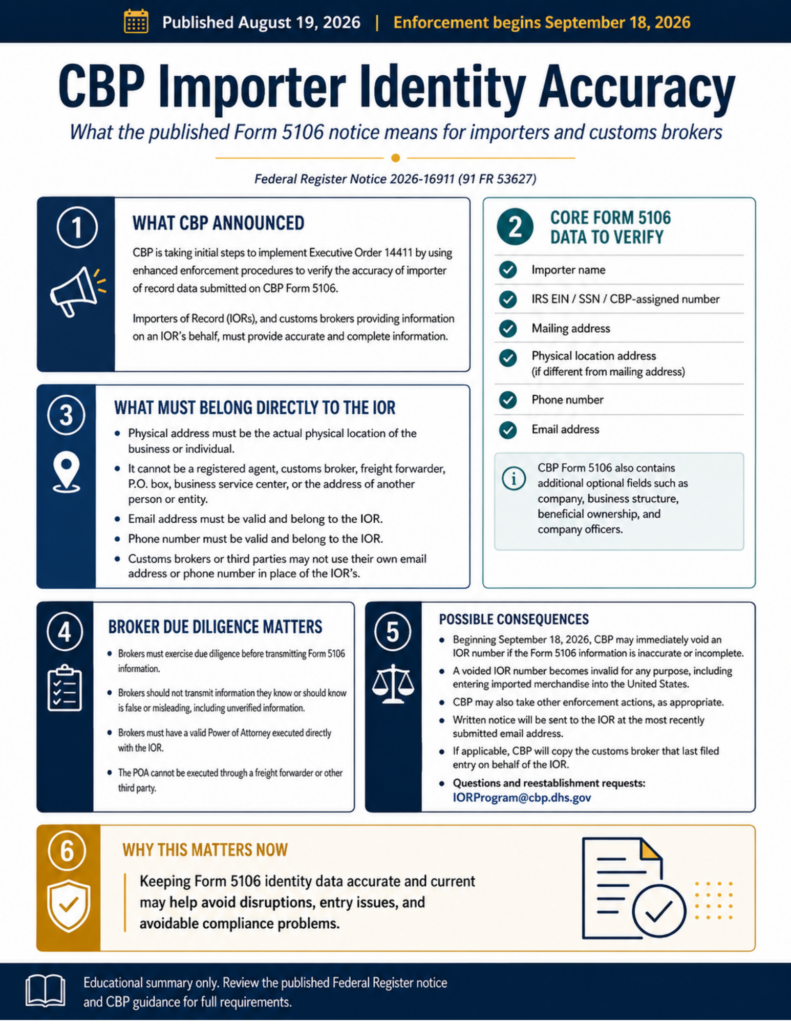
U.S. Customs and Border Protection is taking another step under Executive Order 14411, this time focused on the accuracy of Importer of Record information submitted through CBP Form 5106. This form is used to create or update importer identity information, and CBP is now using enhanced enforcement procedures to verify that the information on file is accurate and complete.
The notice applies to both new and existing Importers of Record. CBP states that importers, or customs brokers submitting information on the importer’s behalf, must make sure the information provided is correct. If CBP determines that the Form 5106 information is inaccurate or incomplete, the importer number may be voided, which would make it invalid for entering merchandise into the United States.
This update also gives more detail on what CBP expects to see. The physical address must be the actual location of the business or individual, not a registered agent, customs broker, freight forwarder, P.O. box, business service center, or another party’s address. The email address and phone number must also belong to the Importer of Record, not a broker or third party.
Customs brokers also have a clear due diligence role. CBP states that brokers should not transmit information they know, or should know, is false, misleading, or unverified. Brokers submitting Form 5106 information on behalf of an importer must also have a valid Power of Attorney directly with the Importer of Record, not through a freight forwarder or other third party.
Another important part of this notice is that CBP is not only looking at new importer records. CBP states that it is reviewing Form 5106 information already on file for Importers of Record. That means importers may want to treat this as a good time to review their current records, not just future filings. Simple details like an outdated phone number, incorrect email address, old physical location, or unclear broker authorization can create problems if CBP needs to verify the importer’s identity.
This update also fits into the larger customs enforcement direction we have been watching. CBP is placing more attention on who is acting as the Importer of Record, whether importer information is accurate, and whether the parties involved can support the information being submitted. For importers, the goal should be simple: make sure the record is clear, current, and easy to verify. Keeping accurate importer identity information can help reduce delays, avoid unnecessary questions, and support a smoother entry process when cargo is moving.
The takeaway is simple: importer identity information should be reviewed before it becomes a problem. Importers may want to confirm that their legal name, physical address, phone number, email address, EIN or other identification number, broker authorization, and Power of Attorney records are accurate and up to date. CBP’s enhanced enforcement is scheduled to begin September 18, 2026. If you have questions about an upcoming shipment, Importer of Record setup, or customs documentation, Southern Star Navigation is here to help.
Read CBP’s Form 5106 Importer Identity Notice
CBP Corrects Drawback Treatment for New Section 301 Duties
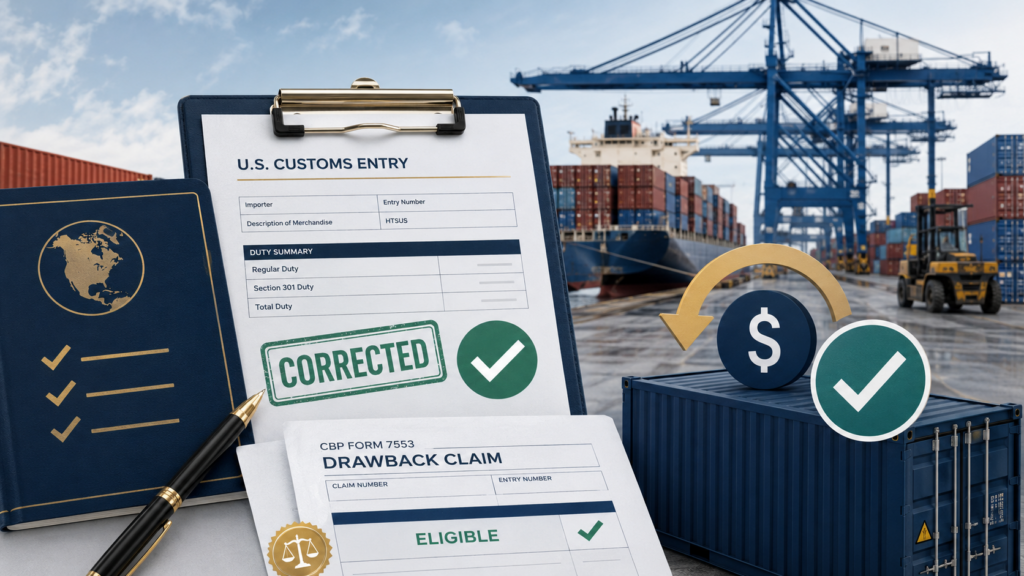
CBP issued an important correction on August 18, 2026, regarding drawback treatment for two recently implemented Section 301 duty programs. CBP clarified that HTSUS 9903.05.01, associated with Section 301 duties on certain products from Brazil, and HTSUS 9903.05.20 through 9903.05.84, associated with the Section 301 Forced Labor Import Duties, are drawback eligible.
This correction follows an August 12 system validation update that had disallowed drawback for those classifications. CBP has now corrected the FD07 validations in production to allow drawback for the affected HTSUS classifications. Importers, brokers, and drawback claimants should review any affected claims, filing logic, or landed-cost assumptions that may have been based on the earlier validation update. Read the CBP CSMS update
FMCSA Proposal Could Affect Driver Availability
Truck capacity remains mixed across the market, with conditions varying by equipment type and lane. Recent weekly data showed dry van and flatbed spot rates moving lower, while reefer rates increased slightly. Dry van tender rejection rates and tendered freight volume also declined, which suggests shippers may still find available capacity in many markets. Even with softer weekly movement, lane-specific demand, refrigerated freight, border activity and appointment-based deliveries can still create tighter conditions in certain areas.
One issue worth watching is FMCSA’s proposed framework related to English language proficiency violations and out-of-service treatment. The proposal would narrow the current border-zone exception and is estimated to place about 9,000 additional drivers out of service annually. This does not point to an immediate nationwide capacity problem, but it could affect driver availability in certain border-related markets if finalized and enforced as proposed. Shippers with cross-border freight, drayage needs, tight delivery appointments or time-sensitive truckload moves may want to monitor this development as part of their transportation planning.

Air and Rail Markets Require Lane-by-Lane Review
Airfreight conditions remain uneven, with rate movement changing by trade lane instead of following one clear market direction. China-to-U.S. airfreight rates increased 3% week over week and were 20% higher year over year, while Europe-to-U.S. rates increased 11% week over week and U.S.-to-Europe rates fell 13%. This shows why importers should avoid assuming that airfreight is either broadly improving or broadly tightening. Urgent shipments should still be reviewed by origin, destination, available capacity, transit time and total cost before booking.
Rail also remains an important part of the transportation picture, especially for cargo moving through inland routings or tied to port connections. Current rail discussions continue to focus on service performance, network structure and competition, all of which can affect shippers over time. For customers using intermodal or rail-connected moves, the practical step is to review the actual lane, terminal, railroad connection and delivery timing before committing to a plan. Air and rail may both offer useful options, but the best choice depends on the shipment details, not the broader market headline.
Court Upholds Suspension of De Minimis Treatment
The U.S. Court of International Trade issued a new ruling on August 13, 2026, upholding the President’s authority to suspend the de minimis exemption for low-value imports. De minimis treatment has historically allowed qualifying shipments valued at $800 or less to enter the United States duty-free. The court found that the law describes this treatment as a “privilege” and that the President had the authority to suspend the use of that privilege during a declared national emergency.
For importers, the ruling means the current suspension of de minimis treatment remains in place. Goods that may have previously entered duty-free under the $800 threshold can now be subject to the normal duties that apply to the merchandise. The court also noted that Congress has already passed a separate law repealing the de minimis exemption effective July 1, 2027, while CBP also issued interim final rules in June 2026 implementing the de minimis suspension process for postal and non-postal shipments. Importers that relied heavily on low-value shipments should continue reviewing their entry process, landed costs and customs compliance as these changes move forward. Read More
Jones Act Waiver Extended Through November 15
The Department of Homeland Security has approved a second 90-day extension of the Jones Act waiver originally issued on March 17, 2026. The extension begins August 17 and runs through November 15, 2026. To qualify under the extended waiver, covered products must be loaded onto the vessel before 11:59 p.m. ET on November 15. CBP also released an updated list of products that may be covered by the waiver.
CBP also announced an important change to the process for using a foreign-flag vessel under the waiver. Before a voyage begins, the trade community must now submit a Vessel Availability Request so MARAD can check whether a qualified U.S.-flag vessel is available. The Department of War will then determine whether the proposed shipment can use the waiver. Companies planning covered coastwise shipments should review the new process before making transportation arrangements, since approval is now required for individual proposed voyages.